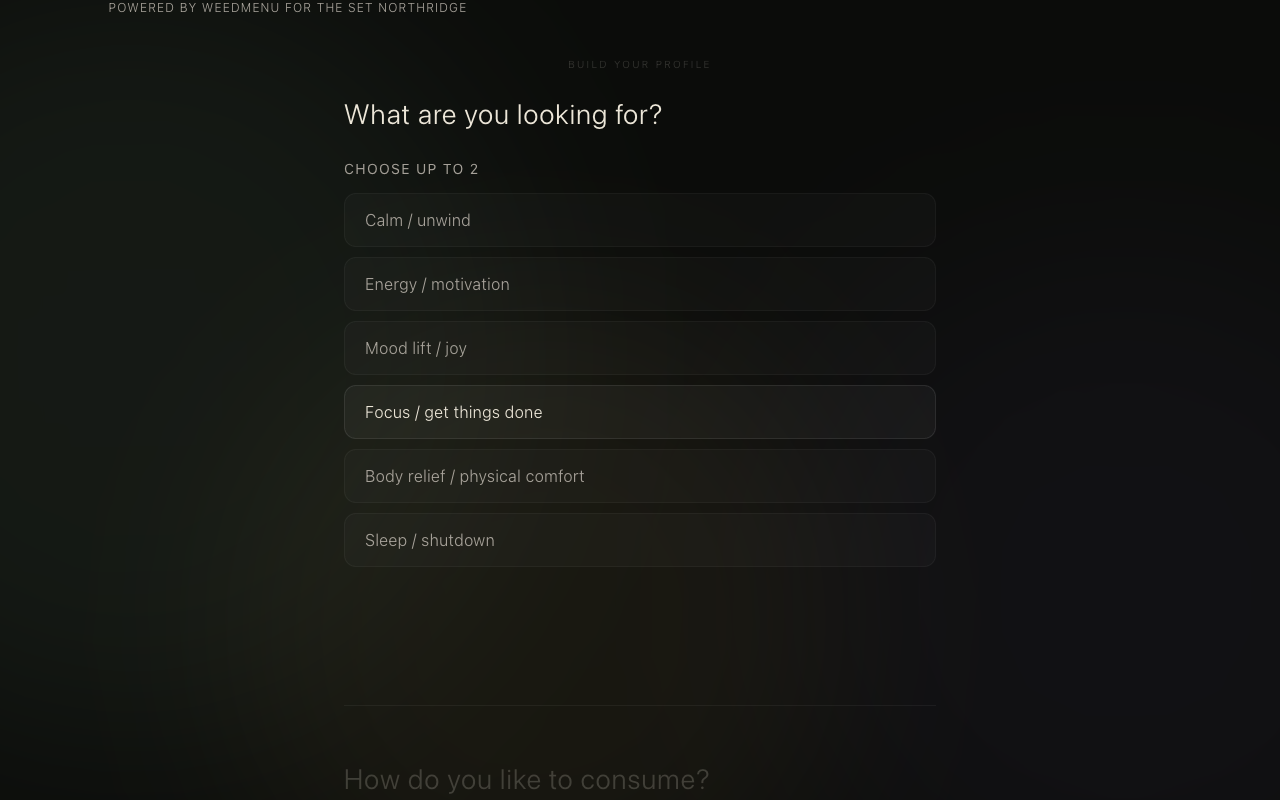
Start with the person.
People often arrive at a cannabis store with a need, a preference, or a desired experience. They know what they have liked before and what they want to avoid. They may not know the terminology or how to navigate a large menu.
I got absorbed in the gap between having good information and helping someone make a useful decision. More choices alone did not make the experience feel more helpful.
Build the conversation first.
I mapped what someone might say, the follow-up questions that would actually help, and how to carry that context into an understandable shortlist. I shaped the flow, the information gathered, and the explanations around a recommendation.
My build process starts with a small, testable brief. I work in the codebase with AI coding assistance, review the changes, run tests and type checks, and try the experience on desktop and mobile. I use preview deployments to check the integrated result before releasing a change.
What I’m learning.
The product is early. Most learning so far comes from informal demos, industry conversations, and watching where people need clarification.
People respond well when the experience reflects their intent in plain language. An explanation matters: why a choice might fit, what the tradeoff is, and where staff judgment belongs. These are directional observations, not measured performance results.
The next question.
Does guided discovery improve decision confidence and help someone reach a useful shortlist faster than browsing alone? That is what I want to validate through more real interactions.
I’d like to meet retail operators and collaborators who can help put this question to the test.
Let’s talk